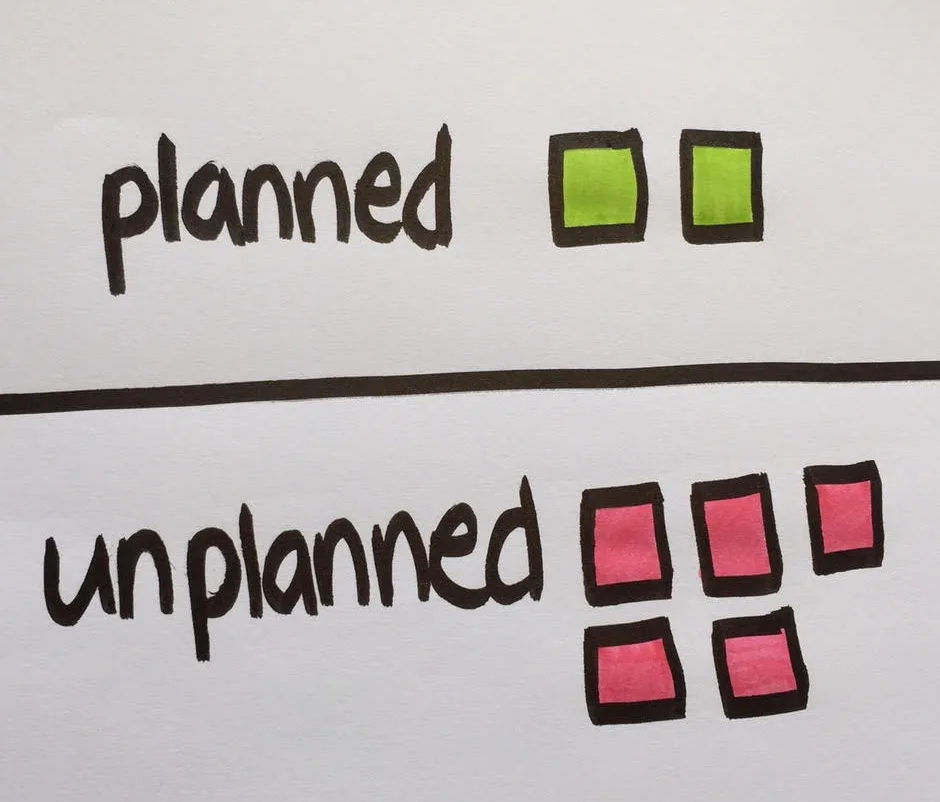
Unplanned work — firefighting — is reactive, expensive, and steals time from the planned work that actually moves the business forward.
Like most people, you probably start work every morning with a plan in mind. Instead, you end up dealing with urgent items that pop up randomly throughout the day. Putting out fires makes your day chaotic, puts you behind schedule, and forces you to rush everything to meet deadlines.
Sound familiar? This is unplanned work — also called firefighting. At a fintech where I worked, we worked daily to reduce it. Your ability to handle unplanned work properly is key to success — but first you need to recognize when you're in firefighting mode.
At a glance
- Planned work is proactive with clear goals; unplanned work is reactive and comes at the expense of planned work.
- HBR identifies six chronic symptoms — if three or more apply, firefighting is systemic, not occasional.
- Six practical responses: list, triage, delegate, automate, align to business goals, and document in a knowledge base.
- Unplanned work never disappears entirely — managing it well is the discipline that frees capacity for what matters.
Planned vs. unplanned work
Planned work is proactive. Your goals are clear, you've defined your tasks, and you've estimated the effort. You know the cost.
Unplanned work is reactive. It is very expensive because unplanned work comes at the expense of planned work. When you spend all your time firefighting, there's little time or energy left for planning. When you react to a situation, you will never reach your full potential.
Are you firefighting?
According to an article published on the Harvard Business Review website, firefighting is best characterized as a collection of symptoms. You're a victim if three of the following linked elements are chronic within your business unit or division:
- There isn't enough time to solve all the problems — more problems than problem solvers can deal with properly
- Solutions are incomplete — problems are patched, not solved; underlying causes remain
- Problems recur and cascade — incomplete solutions cause old problems to reemerge or create new ones elsewhere
- Urgency supersedes importance — long-range activities are repeatedly interrupted or deferred
- Many problems become crises — problems smolder until they flare up, often just before a deadline
- Performance drops — so many problems solved inadequately that overall performance plummets
Stop fighting fires: six things you can do
Maintain a bullet list of unplanned work items
Nothing fancy — just a bullet list. You need to know your enemies so you can act on them. Write them down. Share them with coworkers who might have the same pain.
Perform triage
Because you listed them, you'll realize some items recur. These hurt the most. Categorize by occurrence, priority, and impact. Work on the ones aligned with business goals.
Delegate
Ask yourself if the item can be delegated. If yes, document the resolution as a playbook and delegate immediately. For more on this, see the 4 D's of productivity.
Automate
If items recur, why not automate the resolution? Investing time to automate saves time long-term. Automation also means documentation — and documentation enables delegation.
Identify business goals
Ask: is this urgent? If yes, is it related to a business goal? Are you responsible for that goal? If you're a bottleneck, should you only work on high-priority items tied to your goals?
Build a knowledge base
Always document the resolution. How can you delegate without providing the solution? If you take time to fix an issue, document it in a searchable knowledge base accessible to coworkers.
In conclusion
The do's: List unplanned work. Work on items that hurt the most. Delegate. Document the resolution. Automate.
Remember, there is always unplanned work. If you learn how to manage it, you will generate more value and spend more time on what really matters: planned work.
References: Stop fire fighting (HBR) · The 4 D's of Productivity · The Phoenix Project
Related on this site
If firefighting is your team's default mode, let's talk about breaking the cycle.