Cybersecurity is no longer just IT's job — a security-first culture weaves protection into daily operations and every level of decision-making.
In today's evolving digital landscape, every employee plays a critical role in protecting an organization's assets and data. Building that culture isn't about more checklists. It's about leadership commitment, practical training, and making secure behavior the easy default — not an afterthought bolted onto busy workflows.
I've seen this work in organizations I've supported: when security becomes "how we work" instead of "what IT nagged us about," incidents drop and trust with clients rises.
At a glance
- Security must be a top-down priority with visible leadership advocacy — not delegated entirely to a CISO slide deck.
- Onboarding, ongoing training, and a speak-up culture turn employees into the first line of defense.
- Shift-left security in development, procurement, and vendor management prevents expensive retrofits.
- Recognition and continuous improvement keep awareness fresh as threats evolve.
Make security a leadership priority
Security must be a top-down initiative. When executives and management actively advocate for security, employees are more likely to take it seriously. CISOs and security leaders should regularly communicate the importance of cybersecurity and ensure it aligns with business objectives — not compliance theater.
Embed security in onboarding and training
New employees should receive security awareness training as part of onboarding. Regular sessions on phishing, password management, multi-factor authentication, and secure data handling reinforce best practices.
Gamified learning and simulated phishing exercises can make training engaging — but only if they're followed by clear, non-punitive reporting paths when someone clicks the wrong link.
Encourage a speak-up culture
Employees should feel comfortable reporting suspicious activities without fear of blame. Implement an easy-to-use reporting system for phishing emails, security incidents, or policy violations.
A security-aware workforce is an organization's first line of defense — but only if reporting feels safe.
Integrate security into business processes
Security should not be an afterthought. It must be part of product development, software engineering, procurement, and vendor management. Adopting a Shift-Left approach in DevOps ensures security is addressed early in development rather than retrofitting it later.
| Area | Shift-left practice |
|---|---|
| Development | Threat modeling and secure code review in sprint planning |
| Procurement | Security requirements in vendor evaluation |
| Operations | Least-privilege access and monitored endpoints |
| Incident response | Documented playbooks, not improvisation |
Reinforce security through policies and tools
Clearly defined security policies should be easy to understand and accessible. Tools like password managers, endpoint detection, and secure communication platforms help employees comply without friction.
Good policy plus bad tools equals workarounds. Good tools plus vague policy equals confusion. You need both.
Make security engaging
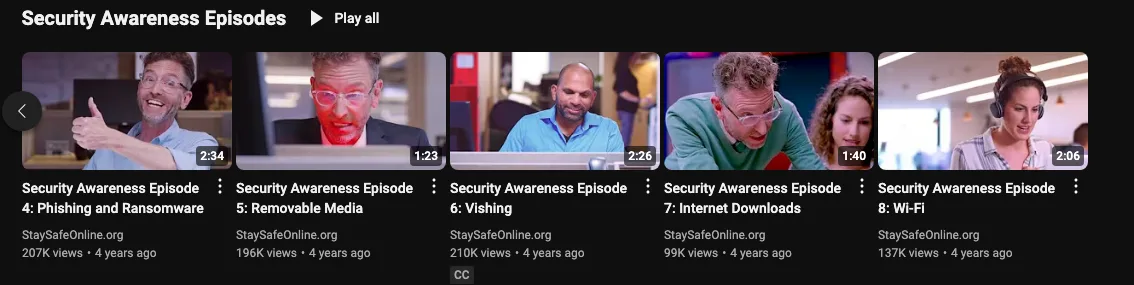
Security awareness doesn't have to be boring. StaySafeOnline.org offers a video series worth watching with your team — why not make it a company event?
A few to get started: StaySafeOnline Security Awareness video series
Subscribe to their channel: @StaySafeOnline
Reward and recognize secure behavior
Recognizing employees who follow security best practices fosters positive reinforcement. Consider incentives, awards, or shout-outs in company meetings for individuals who exemplify security-conscious behavior.
Continuously improve and adapt
Security threats are ever-changing, and so should your approach. Conduct regular security audits, update training materials, and adapt policies based on emerging risks. Engage employees in security discussions and solicit feedback.
Related on this site
Building a security-first culture takes consistent effort — but the payoff is reduced risk, protected data, and trust with customers and partners. Let's talk if you want to strengthen security without slowing operations.