Cybersecurity is no longer just IT's job — a security-first culture weaves protection into daily operations and every level of decision-making.
Security touches everyone's workday — not just the IT team's inbox. Building that culture isn't about more checklists. It's leadership showing it matters, practical training people actually use, and making secure habits the easy default — not something bolted on when everyone's already rushing.
I've seen this work in organizations I've supported: when security becomes "how we work" instead of "what IT nagged us about," incidents drop and trust with clients rises.
At a glance
- Security lands best when leaders visibly champion it — not when it's delegated entirely to a CISO slide deck
- Onboarding, ongoing training, and a speak-up culture turn employees into the first line of defense
- Shift-left security in development, procurement, and vendor management prevents expensive retrofits
- Recognition and continuous improvement keep awareness fresh as threats evolve
1. Make security a leadership priority
Security works best when leaders visibly champion it — not when it's buried in a CISO slide deck nobody reads. When executives talk about it regularly and tie it to how the business actually runs, teams pay attention. The goal is real alignment, not compliance theater.
2. Embed security in onboarding and training
Welcome new hires with security awareness that's part of onboarding — not a box they check on day three and forget. Short, regular refreshers on phishing, passwords, multi-factor authentication (MFA), and handling data safely keep habits fresh without feeling like lectures.
Gamified learning and simulated phishing exercises can make training engaging — but only if they're followed by clear, non-punitive reporting paths when someone clicks the wrong link.
3. Encourage a speak-up culture
People speak up when reporting feels safe — not when they're worried about looking careless. Make it easy: one simple way to flag phishing, odd incidents, or policy questions, with no blame attached.
Your team is your first line of defense — when reporting feels safe.
4. Integrate security into business processes
The best time to think about security is while you're designing the process — not after launch. Build it into product development, engineering, procurement, and vendor choices. A shift-left habit in DevOps means addressing risk early, not bolting on controls later.
| Area | Shift-left practice |
|---|---|
| Development | Threat modeling and secure code review in sprint planning |
| Procurement | Security requirements in vendor evaluation |
| Operations | Least-privilege access and monitored endpoints |
| Incident response | Documented runbooks, not improvisation |
5. Reinforce through policies and tools
Policies people can actually read — plus tools that don't fight them — make secure behavior the path of least resistance. Password managers, endpoint detection, and secure communication platforms help when they fit how people already work.
Good policy plus bad tools equals workarounds. Good tools plus vague policy equals confusion. You need both.
6. Make security engaging
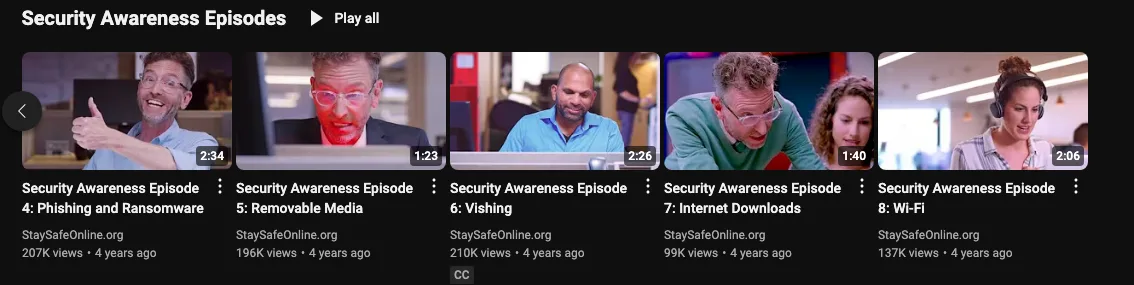
Security awareness doesn't have to be boring. StaySafeOnline.org offers a video series worth watching with your team — why not make it a company event?
A few to get started: StaySafeOnline Security Awareness video series · @StaySafeOnline
7. Reward and continuously improve
A quick thank-you when someone models good security habits goes further than another policy email. Threats evolve — keep audits, training, and policies fresh without turning it into a yearly scramble.
This appendix complements AI governance and data safety with AI — culture comes first, controls follow.
Where you are
You're in Appendix · Security, part 1 of 3. Next: Security is a journey, not a destination. For the main path on privacy and AI, see Is our data safe with AI?.
Building a security-first culture takes steady effort — but the payoff is real: less risk, protected data, and stronger trust with clients and partners. If you'd like to strengthen security without slowing day-to-day work, Let's talk — even one focused session can clarify a first step.