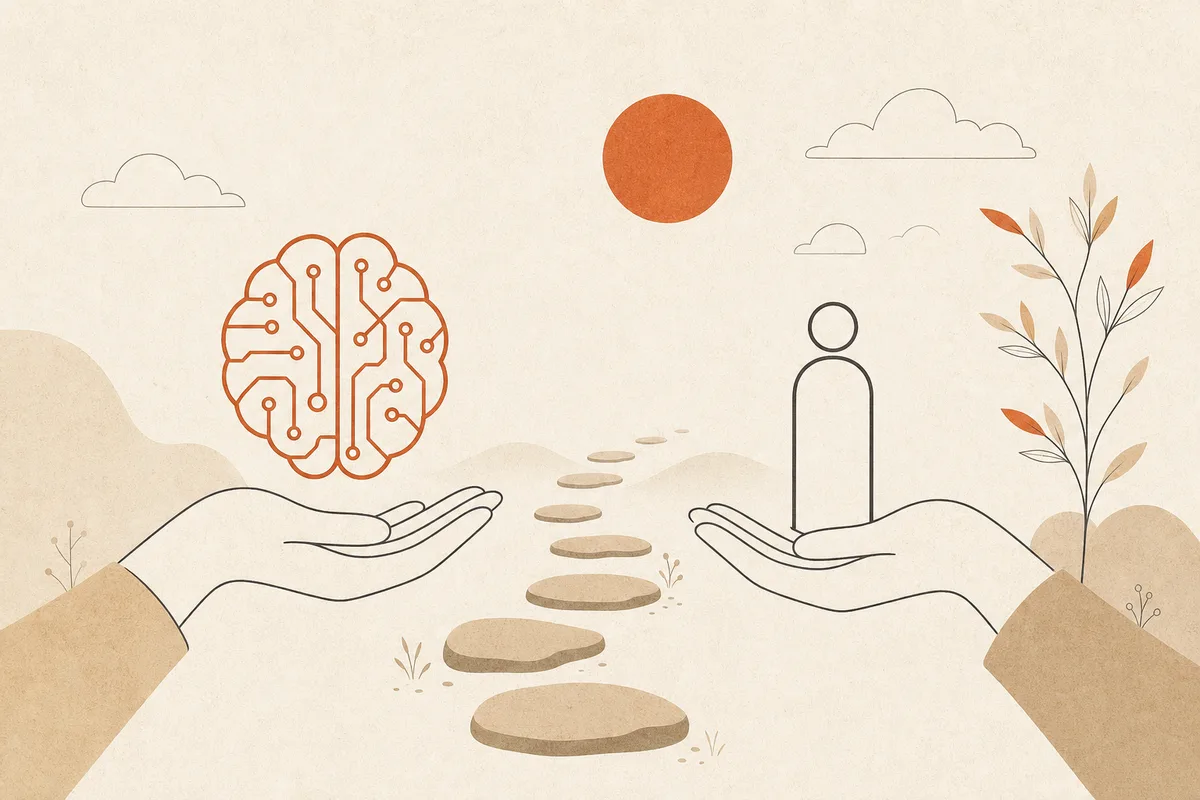
"Will AI replace our employees?" — I hear it in almost every first meeting with SMB leadership.
It's a legitimate concern. A bad answer ("never" or "it's inevitable") can stall a useful project or create false expectations. After 25 years working with operational teams, here's how I frame the conversation with executives and staff.
At a glance
- AI mostly replaces repetitive tasks, not whole roles — when work is scoped properly
- Roles at risk are those dominated by mechanical work with little judgment, relationship, or accountability
- Roles that gain leverage are those where humans validate, decide, advise, or build trust
- A well-chosen pilot reassures the team: AI removes grunt work, not professional value
- The real question isn't "who leaves?" — it's "what do we redeploy the recovered time toward?"
What AI actually replaces today
In the SMBs and professional firms I work with, AI mostly removes:
- Retranscription and formatting of long notes
- Searching through repetitive documents
- First drafts of standard reports or emails
- Classifying and routing information using clear rules
These aren't strategic decisions, client negotiations, or professional judgment. They're mechanical hours — often hated by the people doing them.
| Type of work | Replacement risk | Example |
|---|---|---|
| Mechanical, repetitive, no human validation | High | Identical manual data entry every week |
| Assisted, with human review | Low | AI-drafted meeting notes validated by a manager |
| Relational, decision-heavy, creative | Very low | Client advisory, arbitration, team leadership |
What AI doesn't replace (and shouldn't)
- Legal or professional accountability for a decision
- Client trust when someone wants to talk to a person
- Judgment in ambiguous or sensitive situations
- Team coordination and change management
When a leader promises "AI will do everything," the team is right to worry. When you say "AI will remove paperwork so you can do more of what matters," the conversation shifts.
Why fear blocks good projects
I've seen organizations delay concrete gains — meeting notes, summaries, reports — because nobody addressed the fear openly. The team works around the tools, or a manager imposes one without explanation.
Three moves that help:
- Name the fear — "This pilot doesn't replace anyone. Here's what we automate and what stays human."
- Pick a visible, low-risk case — automated meeting notes are a classic: everyone sees the gain, nobody loses a job.
- Redeploy saved time — don't just "do more with less"; show where recovered hours go (client follow-up, quality, training).
What the data suggests (without hype)
Studies vary, but one thread is consistent: automation and AI transform tasks more than they wipe out jobs wholesale — especially in professional services where relationships matter. Organizations that succeed invest in upskilling: how to validate AI output, ask better questions, and keep final accountability.
That's not magic. It's change management — the same discipline as any operational project.
Questions for leadership
- Which tasks do our teams dislike but still have to do?
- Where do we lose hours without creating client value?
- If we recovered five hours per person per week on one process, what would we do with that time?
- Who validates decisions today — and who must keep doing that?
Related on this site
- AI in SMBs: start small, measure, keep trust
- Meeting notes: a first AI win
- Start automation without disrupting everything
AI in service of people isn't another tagline. It's a promise you keep by starting small, measuring, and respecting teams. If "will we lose people?" is blocking your thinking, let's talk — an honest conversation beats a poorly launched project.