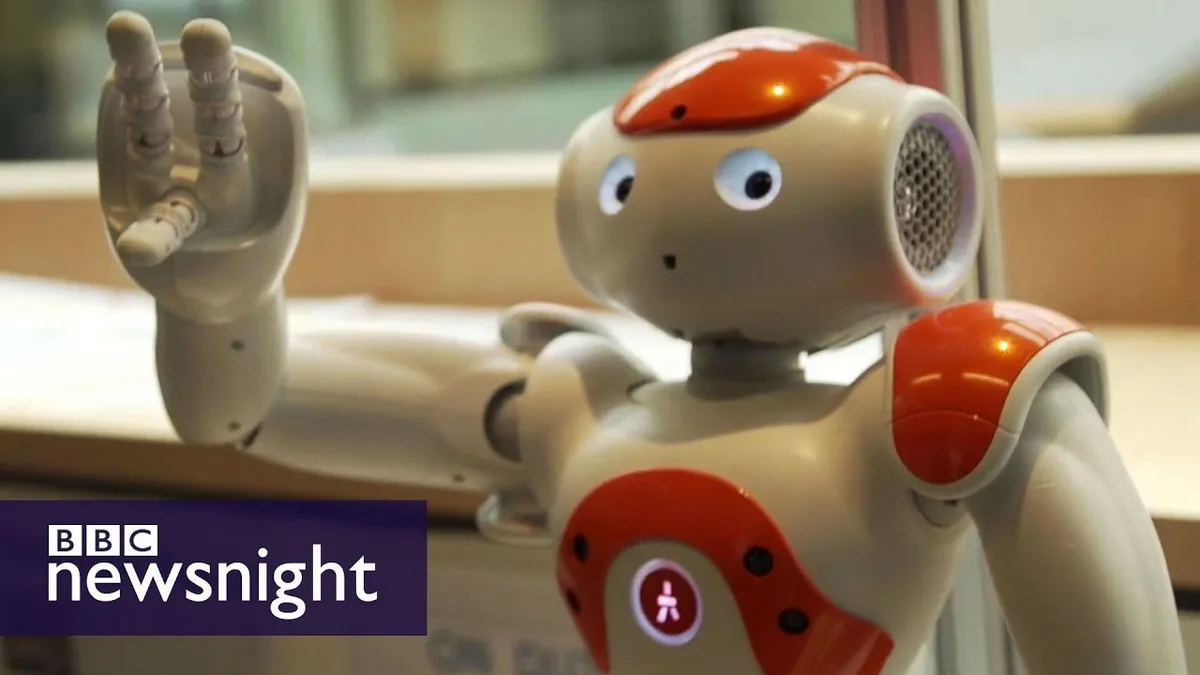
BBC Newsnight's 2017 visit to Microsoft AI research labs offers a useful historical lens — enterprise AI looked very different before the generative wave.
BBC Newsnight offered a rare look inside Microsoft's AI research labs — from breakthrough experiments to the people driving the work. Filmed in 2017, the segment captures a moment when enterprise AI meant research breakthroughs, custom models, and long development cycles — not the copilots and LLM assistants teams deploy in weeks today.
Worth a watch if you want context for how far the field has moved — and what hasn't changed (the need for clear use cases, data governance, and human oversight).
At a glance
- The segment shows Microsoft Research's lab culture — long-horizon experiments, not product roadmaps.
- Enterprise AI in 2017 meant specialized models and research partnerships; today's SMB path starts with operational pilots.
- The human element — researchers, ethics, real-world constraints — remains central even as tools democratized.
- Pair this historical view with modern progressive adoption guidance for practical next steps.
Watch the segment
https://www.youtube.com/embed/jnOjJMbEODA
Why this still matters in 2026
Research labs explore what's possible. Operations teams need what's useful. The gap between those two shrank dramatically after 2020 — but the discipline of starting small, measuring outcomes, and keeping humans accountable didn't disappear.
When leaders ask "where is AI heading?", I often point them to two anchors:
- Research horizon — what labs are exploring (this BBC piece, updated research from Microsoft, OpenAI, Anthropic, and others)
- Operations horizon — what your team can pilot this quarter without betting the business
The second horizon is where I spend most of my consulting time. Meeting notes automation, document processing, and workflow assistance deliver value now — without waiting for the next research breakthrough.
From research labs to your operations
| Research lab focus (2017 era) | Practical SMB focus (2026) |
|---|---|
| Novel model architectures | Structured pilots on repetitive work |
| Multi-year experiments | 4–8 week measured pilots |
| Custom training pipelines | Validated outputs with human review |
| Publication and patents | Hours saved and error rates reduced |
Related on this site
Curious what AI could do for your operations this quarter — not in a research lab? Let's talk.