EVERYDAY STORIES
“Grandma, it’s me…”
A familiar voice. An emergency. A request for money. A story designed to touch the emotions directly.
01
The scene
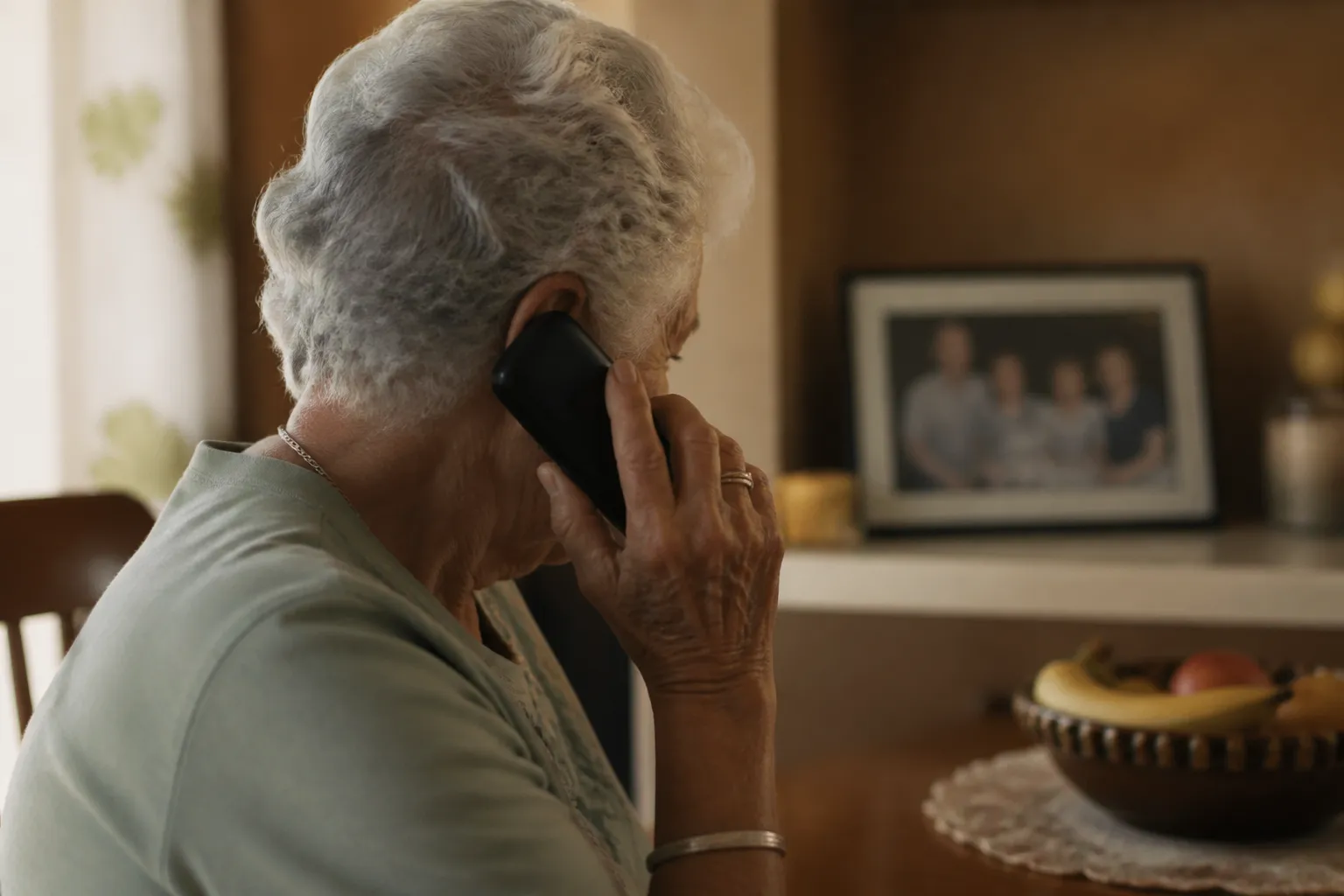
The phone rings. You hear panic on the line. "Grandma… I need your help." It sounds like your grandson — or your niece. Money is needed now — an accident, a trip, a lawyer. You're scared for someone you love. You want to help. There's no time to think.
02
In the room
This is often the hardest scene in the workshop. Eyes get wet. Then we breathe together. We say it plainly: loving someone doesn't mean giving money under pressure from a voice you can't verify.
03
The right habits
01
Hang up gently
You can say: "I'll call you right back." Then hang up. That isn't abandoning anyone.
02
Use the real number
The one in your address book or on your fridge — not the number that just called.
03
Talk to someone else
Another family member, a friend: real distress is easier to verify with more than one person listening.
Keep these in mind
- Hang up.
- Dial the real number.
- Check with someone else.
04
Same scene, different ending
People don't forget the emotion of that first scene. Or the calm of the replay: hang up, dial the number they know, hear the real voice on the other end.
Falling for this isn't gullibility. It's love. Scammers know that. Building the habit of checking protects the people you care about too.