EVERYDAY STORIES
The fake expert
Someone claims they want to fix your computer. Reassuring help, or the start of a scam?
01
The scene
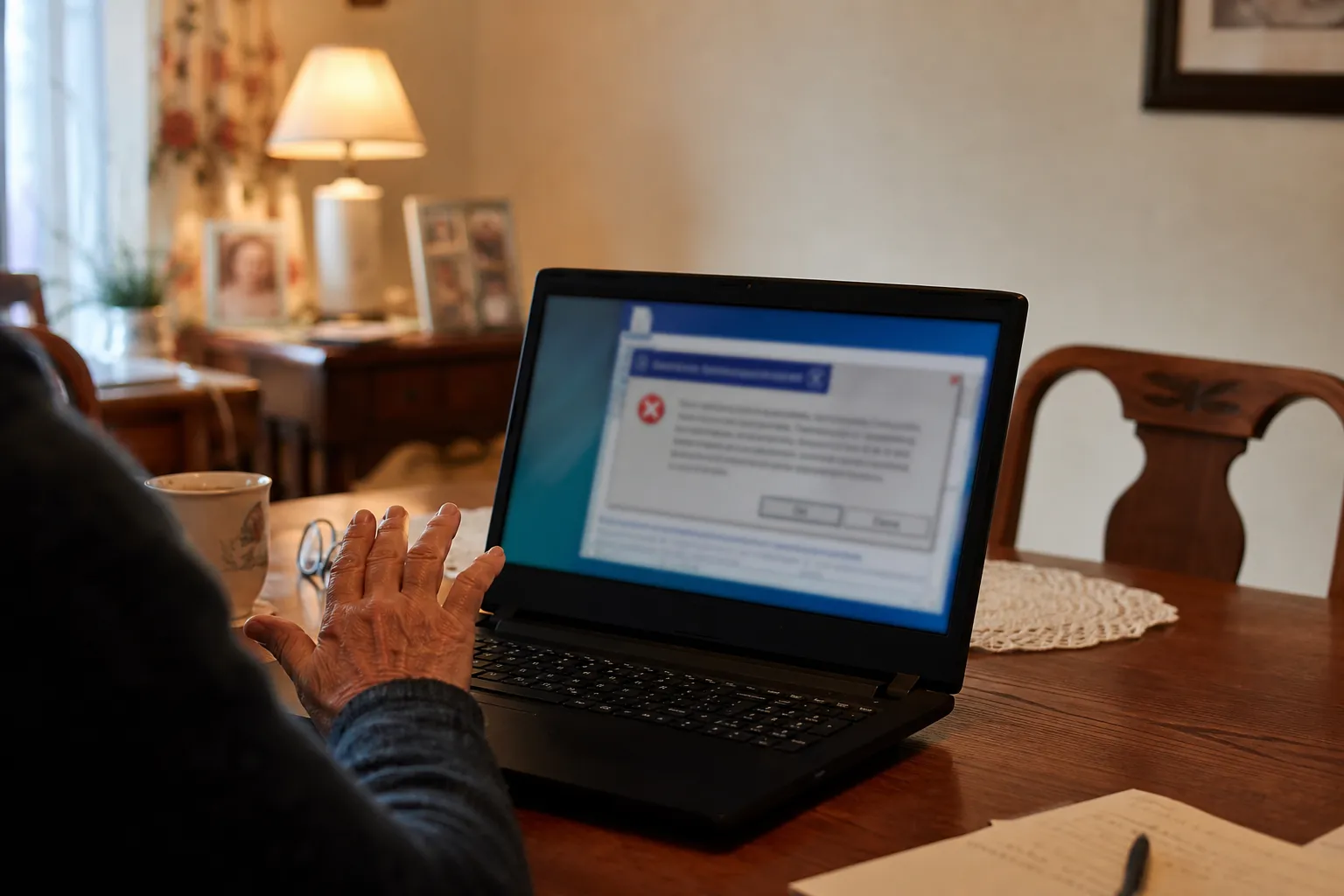
Someone calls with a calm, professional voice. "We've detected a serious problem on your computer." They offer to "take control" remotely and fix everything. You're afraid of breaking something. You just want help.
02
In the room
The scene shows trust building — the polite technician, the reassuring tone — then the moment when too much is asked. In the room, people murmur: "They were so nice." That's often the trap.
03
The right habits
01
They don't call like this
Microsoft, Apple, Google, and your internet provider don't ring you out of nowhere to repair your device.
02
Don't give access
No one you trust asks a stranger to drive your screen unless you called them first.
03
Hang up and ask someone nearby
A grandchild, a neighbour who's good with computers, a friend — someone real you already know.
Keep these in mind
- They don't call.
- No remote access.
- Ask someone you know.
04
Same scene, different ending
People remember the technician's reassuring smile — and the second version of the scene, where someone says "No thank you" and hangs up.
Wanting help with technology is completely normal. Scammers exploit that wish to be guided. Good reflexes can be learned too.